




Protests against OpenAI get increasingly creative

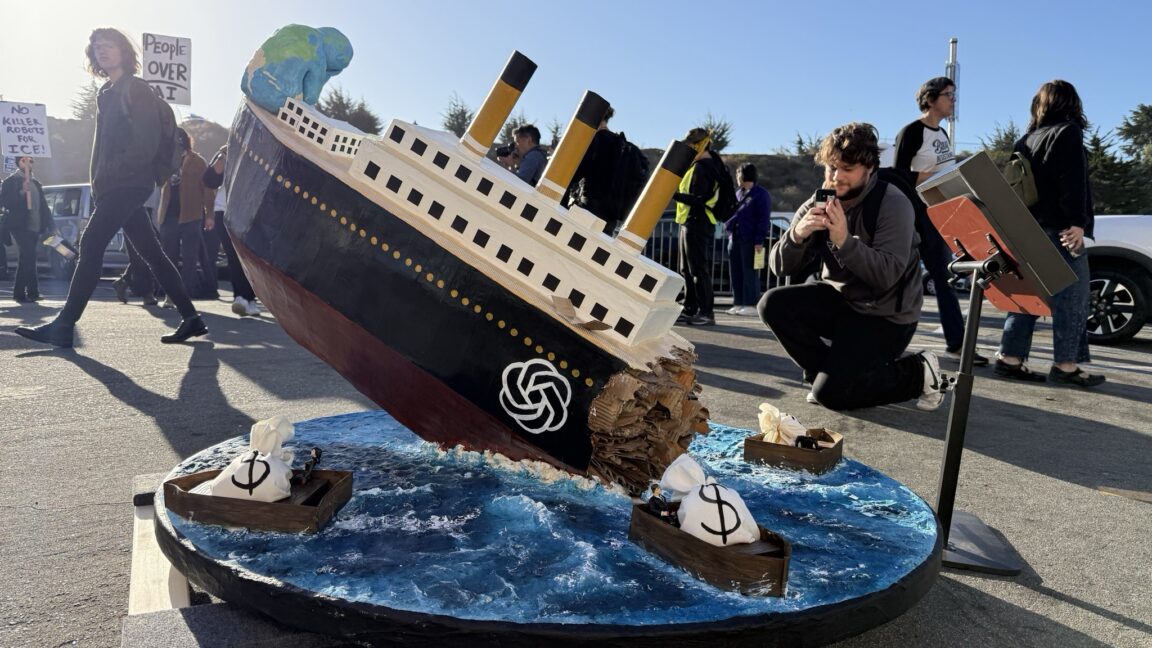
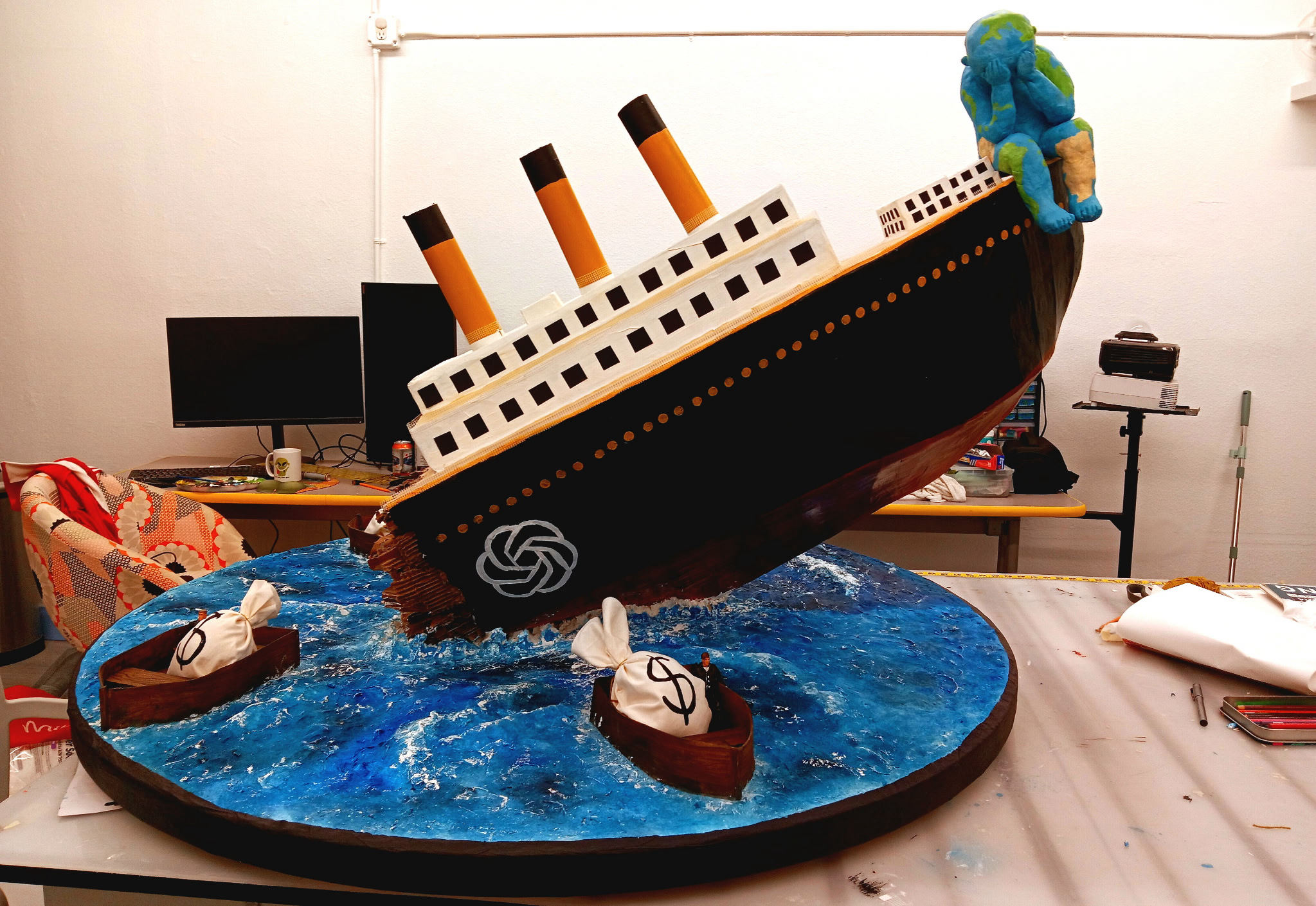
The artwork under construction.
The artwork under construction.
The message is not subtle.
William Fitzgerald
The artwork under construction.
“The cost here is time,” he said. “Doing everything by hand, creating the structure, taking as few shortcuts as possible, and doing this in a really quick time period is a lot of the real cost. In so many ways, that is the cost of art. Good art and intentional art—stuff that makes sense and craftsmanship—that’s a function of time.
“Creativity is our birthright, and when someone sells you a shortcut to escape that—that’s insane to me. In some ways, it is the antithesis of a lot of bad algorithmically generated art. Maybe people will tell us it’s bad art? Who cares! Making and creating is something that AI claims that it does, but it doesn’t.”
OpenAI, as one of the world’s largest AI companies, has been the target of numerous other protests in recent months and years. Last week, for instance, people protested against OpenAI at its New York City offices.
On Monday, training for OpenAI’s latest model, GPT-6.1 Astra, was stopped over safety concerns. Also on Monday, the company apologized for accessing Australian government websites “in ways that we were not authorized to.” Meanwhile, the state of Florida asked a court to halt OpenAI’s development, calling it an “unacceptably risky product.”
OpenAI did not immediately respond to Ars’ request for comment on Tuesday morning.