




Judge rejects Trump’s wild claim EPA can dismiss data center pollution lawsuits


Ultimately, she agreed that “because the Administrator has not taken any action to enforce the Clean Air Act here, these cases do not support the United States’ position.”
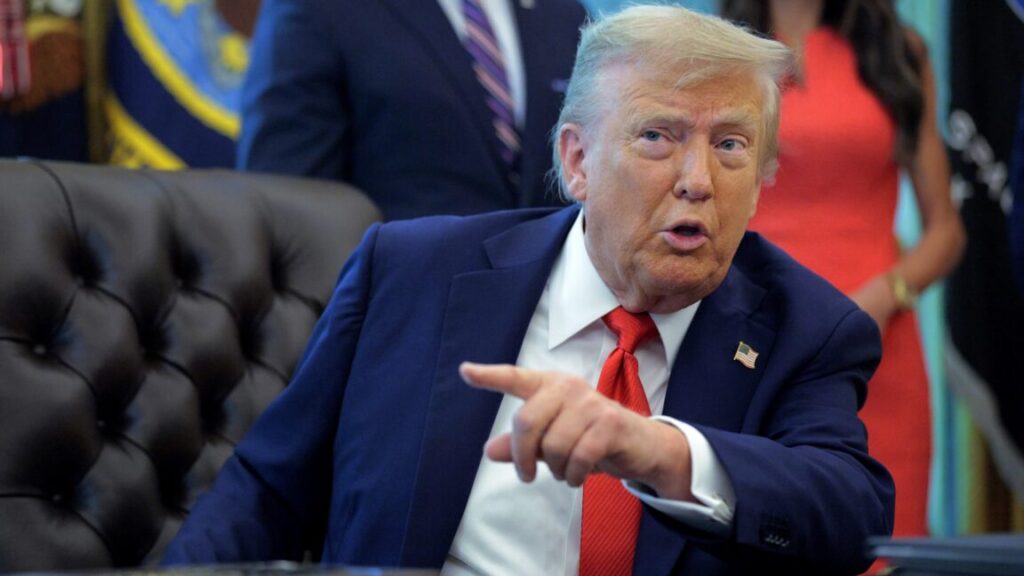
Trump seemed particularly upset that SpaceXAI may face large fines. He argued that “punishing unlawful conduct through civil penalties payable to the Treasury on behalf of the United States is ‘a quintessentially executive power.’” As Trump explained, because the CAA is too vague on this point, “the canon of constitutional avoidance” applies, and courts must err on the side of his administration. Simply dismissing the lawsuit would avoid a constitutional clash, Trump argued.
But once again, Brown disagreed.
The US “fails to identify any ambiguity in the statute’s text to which the Court could and should apply the canon of constitutional avoidance,” Brown wrote. Rejecting Trump’s constitutional “doubts,” she concluded that “constitutional avoidance does not allow the Court to invent a right that does not exist in the statute.”
“That the Clean Air Act’s citizen suit provision allows private parties to enforce the Clean Air Act through civil litigation, therefore, does not make citizen suits an impermissible exercise of the President’s executive power,” Brown wrote. And “it does not follow that all suits seeking civil penalties require the exercise of nondelegable executive power.”
Had Trump succeeded, Americans who are increasingly opposing data centers nationwide may have been widely blocked from seeking fines when pollution can be proven.
Brown said the CAA cannot be interpreted that way, though, since “it can scarcely be doubted that, for a plaintiff who is injured or faces the threat of future injury due to illegal conduct ongoing at the time of suit, a sanction that effectively abates that conduct and prevents its recurrence provides a form of redress. Civil penalties can fit that description.” Critically, “to the extent that they encourage defendants to discontinue current violations and deter them from committing future ones, they afford redress to citizen plaintiffs who are injured or threatened with injury as a consequence of ongoing unlawful conduct,” Brown wrote.